
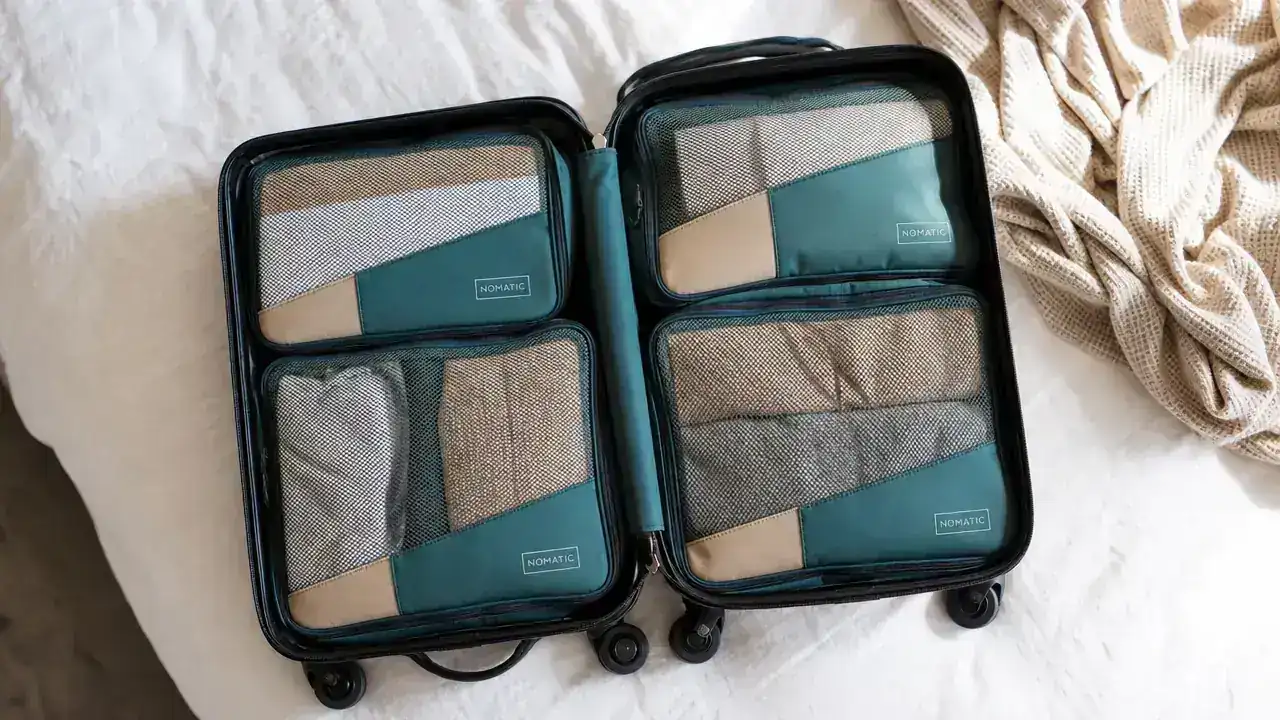
Most people overpack because they do not have a system. They look at a seven-day trip and think seven-day thinking: one outfit per day, plus extras for weather changes, plus shoes for every possible occasion. By the time they zip the bag, it weighs 40 pounds and they are at the check-in counter hoping for mercy. The good news is that packing a full week into a single carry-on is genuinely achievable, and it does not require buying a capsule wardrobe or wearing the same jeans twice in a row. It just requires a repeatable method and one inexpensive tool.
That tool is the Amazon Essentials 4-Piece Packing Cubes set. At today's price, it is the single highest-leverage purchase you can make before any trip. The four cubes give you a built-in organizational system: one cube per category of clothing, stacked neatly inside your bag, so you are not digging through a loose pile at midnight looking for a clean shirt. Once you pack with cubes, you will not go back. The steps below walk through exactly how we use them to fit seven days of clothes into one overhead-bin bag.
Stop checking bags. These budget cubes are the only tool you need.
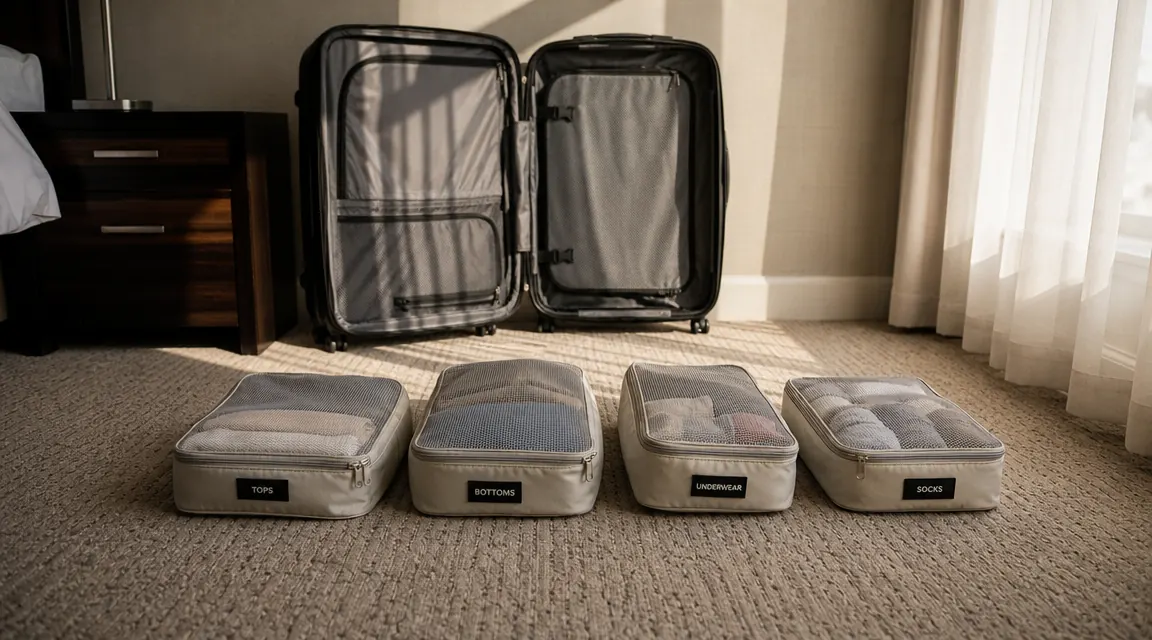
The Amazon Essentials 4-Piece Packing Cubes set comes with four sizes, double zippers, and mesh tops so you can see what is inside without unpacking. Over 43,000 reviewers agree they hold more than they look like they should.
Amazon Check Today's Price on Amazon →Step 1: Start With the Right Bag
No amount of clever packing saves you if the bag is wrong. For carry-on travel, you need a soft-sided bag that fits the most common airline standard: 22 x 14 x 9 inches. Hard-shell bags often run slightly larger and get gate-checked even when they look carry-on sized. A soft-sided bag compresses slightly, which means gate agents are less likely to stop you, and it fits into overhead bins that have awkward angles or partial occupancy.
If you are still using a bag you have had for ten years with an interior that is one big open pocket, now is the time to reconsider. The cubes do the organizing, but the bag has to cooperate. Look for a carry-on with a full-perimeter zip, a flat interior panel on one side, and a separate front pocket for documents and items you need during the flight. That front pocket is not for clothes. Keep it for your passport, earbuds, a sweater, and your neck pillow. Everything else goes in the cubes.
One more detail: weigh the empty bag before you buy it. Some carry-ons weigh four pounds on their own, which eats into your personal item allowance before you have packed a single shirt. Aim for a bag under three pounds empty.
Step 2: Decide What You Actually Need (and Cut It in Half)
Before you touch the cubes, sit down with a piece of paper and write out your trip day by day. For each day, write the main activity: beach, dinner out, walking tour, meetings, travel day. Then assign one outfit per activity type, not per day. If three of your seven days are casual walking days, you do not need three separate casual outfits. You need one casual outfit and a plan to re-wear it or mix pieces.
The clothing strategy that creates the most space is neutrals. Five tops in black, white, grey, and navy mix into far more combinations than five tops in five different colors. A pair of dark jeans works for dinner and sightseeing. One blazer or cardigan can dress up a casual outfit for an evening out. We aim for: five tops, two bottoms, one versatile layer, one dress or dress shirt if the trip calls for it, and enough underwear and socks for the full week. That is a seven-day trip.
The item most people forget to audit is shoes. Shoes are heavy and they kill carry-on packing faster than anything else. Aim for two pairs: one comfortable walking shoe that can pass for casual dinner, and one pair of sandals or flats for warmer climates. Wear the heavier pair on the plane.
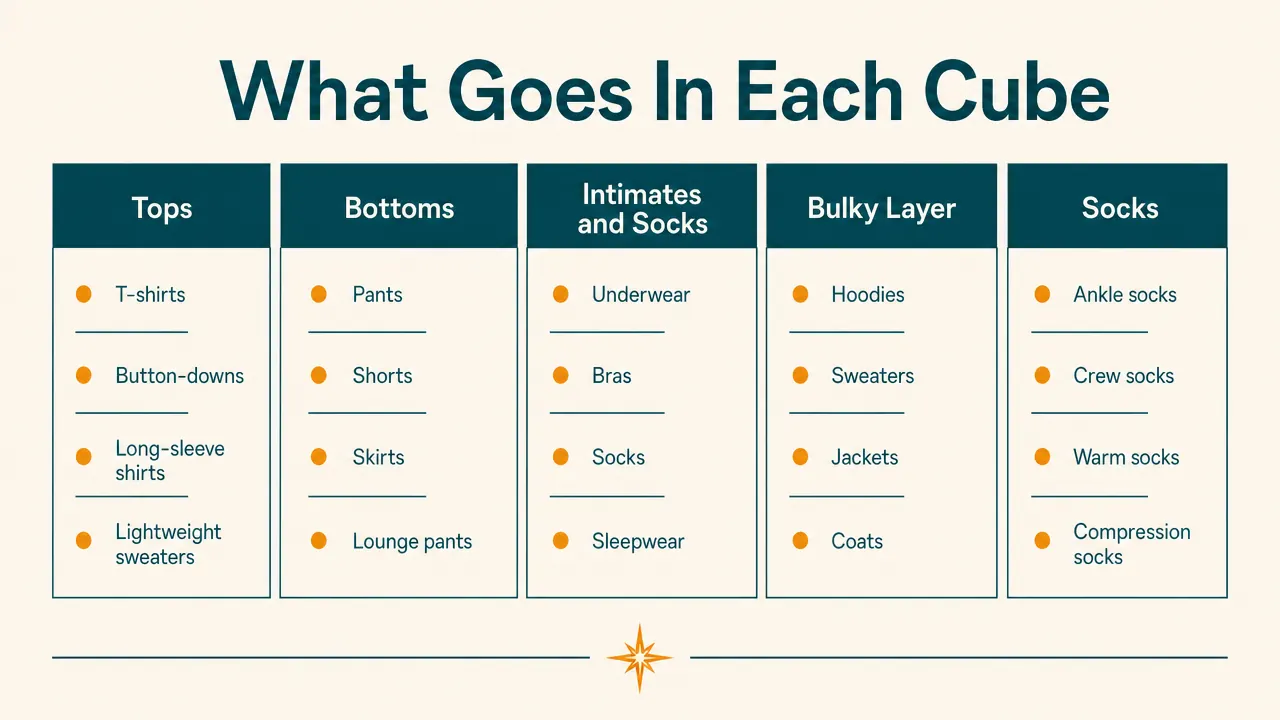
Step 3: Assign One Cube to Each Clothing Category
This is where the Amazon Essentials 4-piece set earns its place. The set comes with one large, one medium, and two small cubes. We use each cube for a specific category, not a specific day. Assign them this way: the large cube holds tops, the medium cube holds bottoms and the versatile layer, one small cube holds underwear and socks, and the second small cube holds items you might want to access mid-trip (a swimsuit, a light scarf, your second pair of pants that you were on the fence about bringing).
Why categories instead of days? Because you unpack the cubes directly into a hotel drawer or onto a shelf when you arrive. The tops cube goes in one drawer. The bottoms cube goes in another. Suddenly your hotel room feels organized rather than exploded. At the end of the trip, everything goes back into its cube, zips shut, and slides into the bag. You never lose a sock to the depths of the suitcase again.
The mesh top on each Amazon Essentials cube is more useful than it sounds. At airport security, TSA agents can see that the cubes contain clothing without opening them. When you are looking for a specific shirt, you can identify it through the mesh without unzipping. Small detail, real convenience.
Step 4: Roll Clothes, Do Not Fold Them
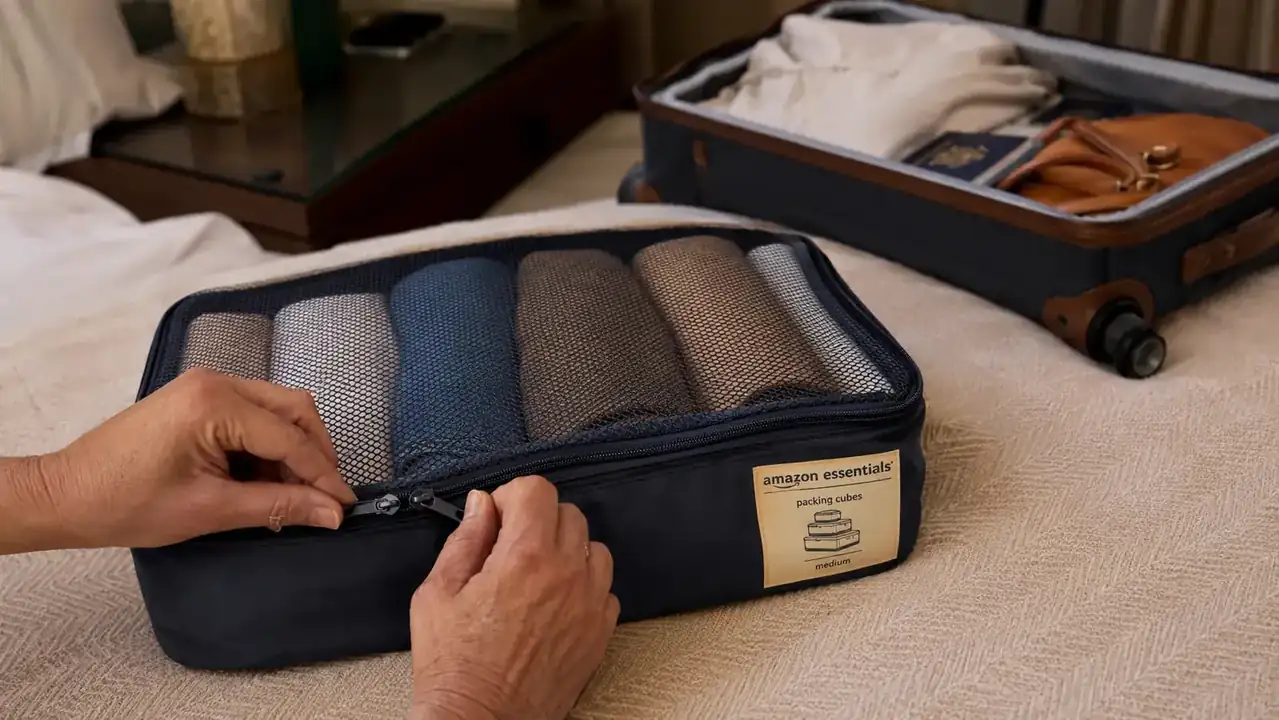
Folding clothes creates thick, air-filled layers. Rolling eliminates the air pockets. For every item that will fit in a medium packing cube, roll it tightly from the bottom hem up, the way you would roll a yoga mat. Lay rolled items side by side in the cube like logs, not stacked on top of each other. Stacking creates a tall pile that resists the zipper. Side-by-side rolling keeps everything flat, easy to see, and cooperative with the zipper.
Jeans and thicker items fold rather than roll well. For jeans, fold in half lengthwise, then fold again, then slide flat against one side of the medium cube. This uses the cube's full depth without losing space to rounded rolls that waste corner space. Shirts, t-shirts, lightweight pants, and anything knit rolls well. Blazers are best folded inside-out to protect the outer fabric, then placed on top of the cube contents before zipping.
Rolling clothes instead of folding them eliminates the air pockets that silently steal half your bag space. Once you see how much more fits, you will never fold for travel again.
Step 5: Pack the Bag in Layers, Heaviest First
Packing cubes are not magic compression bags. They organize; they do not shrink the volume of what you put inside them. The total space they occupy still has to fit in your carry-on. The key is to pack the bag in a deliberate layer order so the cubes fit together efficiently, the way puzzle pieces interlock.
Start with the largest, heaviest cube flat at the bottom of the bag (against the back panel when the bag is upright). This is usually the tops cube or the bottoms cube. The medium cube goes next, on top or beside it depending on your bag's shape. The two small cubes fill the remaining gaps, one on each side or nested together at the top. Shoes go sole-down along one side, inside a shoe bag or wrapped in a shower cap if you brought one. The goal is to have nothing loose in the main compartment. A bag packed with cubes does not shift during the flight, which means it does not get heavier-feeling when you pull it out.
Once the main compartment is closed, weigh the bag. Most domestic carry-ons must be under 50 pounds even if they are carry-on sized. International carriers, and some budget US carriers, check carry-on weight more strictly. Aim to be under 20 pounds. If you are over, the first thing to remove is the item you were least certain about packing.
What Else Helps
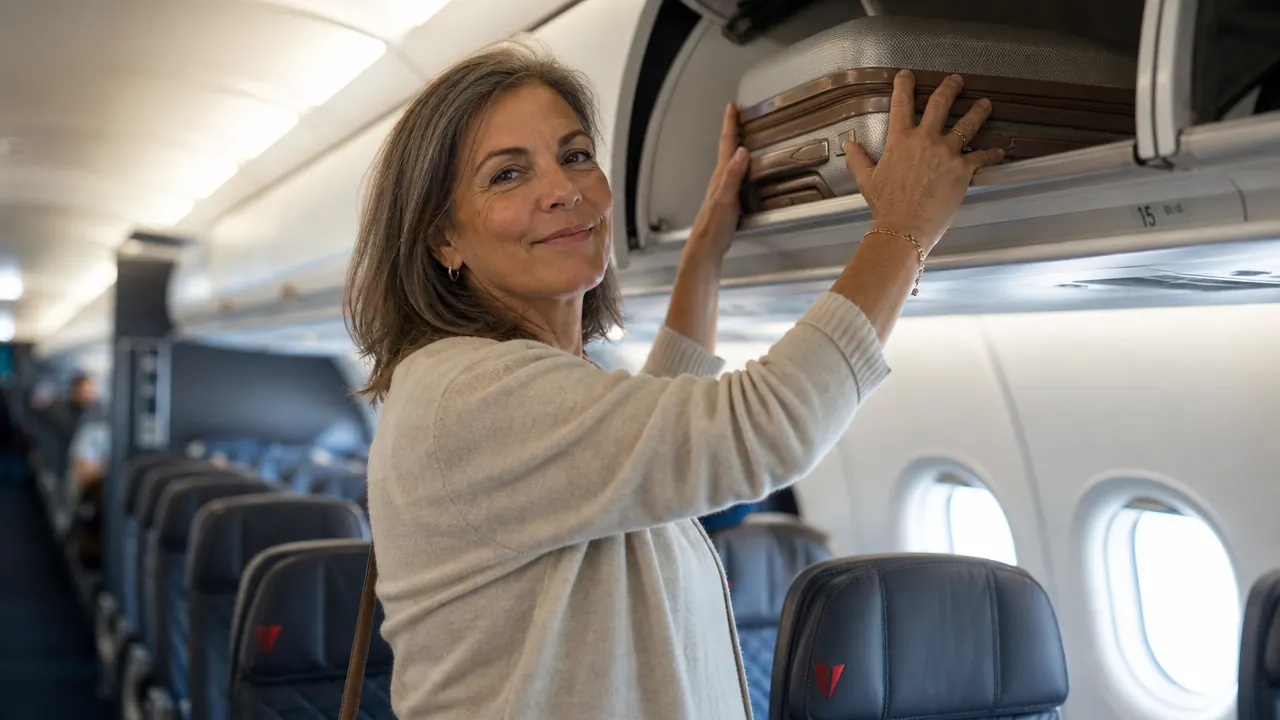
The packing cubes handle clothing. A few other habits round out carry-on-only travel. Wear your heaviest shoes and your bulkiest layer on the plane. Not only does this protect your back from a heavy bag, it also frees up meaningful space in the suitcase. A thick sweater and boots in the bag eat more space than almost anything else. On the plane, they do not take up any space at all.
Pack your toiletries in TSA-approved travel bottles, 3.4 ounces or under, inside a single quart-sized clear bag that goes in your personal item rather than your carry-on. This keeps the carry-on for clothes and keeps TSA screening faster. If you are traveling for more than a week, consider buying toiletries at your destination rather than carrying them. Many travelers also ship ahead a small box of heavier or fragile items, particularly for trips longer than ten days, to avoid the bag weight creeping up.
Finally, leave space. A carry-on packed to absolute maximum capacity is stressful to travel with. You cannot add the souvenir your friend asked you to bring back, and you spend every security line hoping the overhead bin has room. Pack the cubes firmly but leave the bag about 80 percent full. That 20 percent buffer is what separates a comfortable trip from a stressful one.
If you want a deeper look at which packing cubes hold up the longest, our full Amazon Essentials Packing Cubes review covers 14 trips worth of real use. And if you are comparing the Amazon Essentials set against BAGAIL before you buy, our packing cubes comparison runs a side-by-side packing test with both sets in the same carry-on.
Ready to leave the checked bag behind for good?
The Amazon Essentials 4-Piece Packing Cubes set is what makes this whole system work. Four sizes, double zippers, mesh panels, and a price that makes them an easy add-to-cart. If you travel even twice a year, they pay for themselves on the first trip in checked bag fees alone.
Amazon Check Today's Price on Amazon →